Choosing the correct inverter battery starts with your load, backup target, inverter voltage and installation conditions—not the word “tubular” on a label. You will be able to calculate a realistic capacity, compare Exide Home Invatubular with the alternative range, and check whether a shop can supply and install the right battery safely.
Key takeaways
- Match the battery voltage to your inverter’s DC input rating.
- Choose battery capacity from your backup-load calculation, not appliance count alone.
- Compare cycle-life claims only when test conditions and depth of discharge match.
- Ask the shop to verify polarity, ventilation, warranty and installation records.
What Exide Home Invatubular does in a home power system
Exide Home InvaTubular explained simply: it is a vented, tubular lead-acid battery built for repeated charging and discharging in a home inverter or UPS. During a power cut, the inverter draws stored DC electricity from the battery and converts it into AC power for selected household loads.
It is not an automotive starting battery, sealed lithium battery, or an electricity generator.
| Battery type | What it does | Suitable household role |
|---|---|---|
| Vented tubular lead-acid | Stores energy for repeated discharge | Fans, lights, Wi-Fi equipment and selected appliances during outages |
| Automotive starting battery | Delivers a short burst of starting current | Starting a car or two-wheeler, not regular inverter backup |
| Sealed or lithium battery | Stores energy with different maintenance and charging needs | Homes seeking compact, low-maintenance backup |
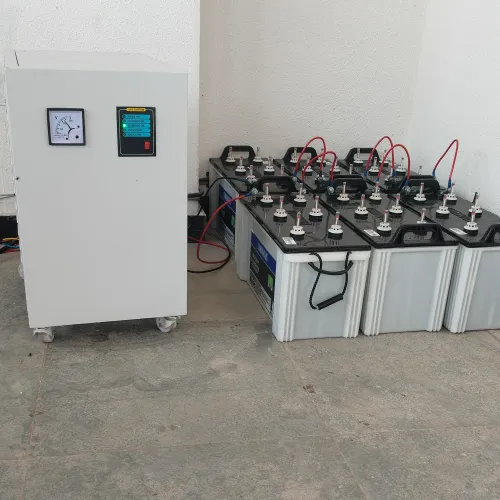
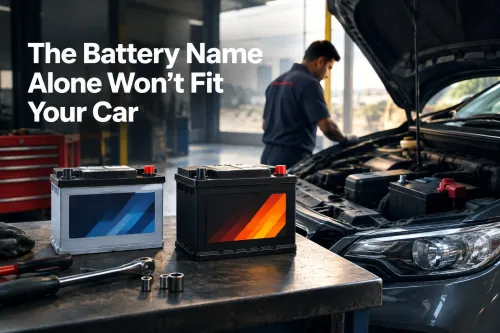
Choose the exact model by checking its label for nominal voltage and ampere-hour rating; “tubular” alone does not identify the battery’s capacity. A 12-volt inverter normally takes one 12-volt battery, while a 24-volt inverter needs two compatible 12-volt batteries connected in series. The batteries should share the same model, capacity and similar age.
This battery suits households that want backup during scheduled or unexpected power cuts and have a ventilated location for a flooded battery. Its real usefulness depends on the load: running a 500-watt load for four hours requires far more capacity than powering two LED lamps and a router.
How to match the battery voltage and capacity to your inverter
A battery will provide the required backup only when its voltage matches the inverter and its usable capacity covers the load. Check the exact model, nominal voltage and Ah rating printed on the Exide tubular battery label, not the word “tubular” alone.
1. Add the running wattage of the appliances you will use together. Include the refrigerator’s running load and allow for its starting surge, which can trip an undersized inverter.
2. Estimate required capacity with: battery Ah = load watts × backup hours ÷ (battery-bank volts × inverter efficiency × permitted discharge). For 300 W over 4 hours at 12 V, 85% efficiency and 70% usable discharge, the result is about 168 Ah. A 150-Ah battery would fall short.
3. Match the bank voltage exactly. A 12-volt inverter takes one 12-volt battery; a 24-volt inverter takes two matching 12-volt batteries in series. Use the same model, Ah rating and similar age, because an old-and-new pair charges unevenly.
4. Ask for runtime at your actual load, not an Ah-to-watts division. Advertised Ah is a test capacity; high current reduces available energy through the Peukert effect, and inverter losses reduce AC runtime.
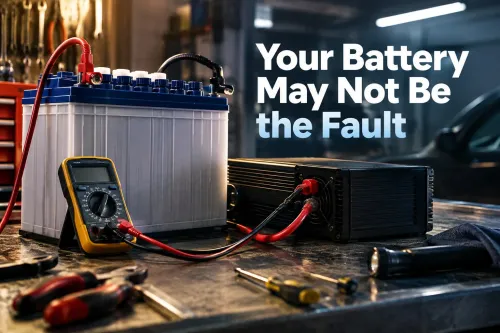
Have the installer confirm the inverter’s lead-acid charging voltage and current settings. An incorrect profile can undercharge or overcharge a flooded tubular battery, even when both products work separately.
What the cycle-life claim means when you compare Exide ranges
A claim of 1,200 cycles at 80% depth of discharge (DOD) means the battery reached that test result after repeated discharges using 80% of its rated capacity before recharging. It does not mean 1,200 power cuts, and it is not a guaranteed number of years.
Heat, low water, undercharging, over-discharge and high loads can shorten actual life.
Compare both ranges using the same test conditions, not just the largest cycle number printed in a listing.
| Outage pattern | Home InvaTubular | Home Invamaster |
|---|---|---|
| Daily long cuts reaching deep discharge | The 1,200-cycle claim is relevant if the battery is maintained and the inverter uses the specified charging profile. | Check the datasheet for cycle life at the same 80% DOD; a different DOD makes direct comparison unreliable. |
| Frequent short cuts | One short outage is only a fraction of a full cycle. Add the discharged percentages over time rather than counting each interruption as one cycle. | Compare usable capacity, recharge behaviour and the equivalent-cycle rating under the same load. |
| Rare outages with long idle periods | Cycle life matters less than calendar ageing, correct charging and keeping electrolyte above the minimum mark. | A lower cycle rating may still suit this pattern if the purchase and maintenance requirements fit your use. |
For example, four outages that each remove 20% of capacity add up to roughly one 80% equivalent cycle. Ask for the exact Home Invamaster model’s cycle rating, test DOD, rated capacity and warranty conditions; do not treat “tubular” or “1,200 cycles” as a complete comparison.
What to verify at an inverter battery shop before installation
Before accepting the battery, make the shop prove that the battery, inverter and installation are one matched system. A search for an inverter battery shop near me helps with service access, but distance does not confirm correct sizing or workmanship.
Check these details on the battery and inverter label:
- Exact Exide Home InvaTubular model, nominal voltage and Ah rating; do not accept “tubular” as a substitute for the model number.
- A 12-volt inverter with one 12-volt battery, or a 24-volt inverter with two matching 12-volt batteries in series. Series batteries must have the same model, capacity and similar age.
- The inverter’s flooded lead-acid charging profile, specified boost or absorption voltage, float voltage and charging-current limit. A lithium setting or incorrect voltage can undercharge or overcharge the battery.
- A legible manufacturing date or batch marking, intact case, secure terminals and no leakage or cracks.
Ask the installer to show what will be fitted:
| Check | What to verify | Why it matters |
|---|---|---|
| Cables | Correct cross-section for the inverter’s maximum DC current | Undersized cables heat up and waste power |
| Protection | DC fuse or breaker close to the battery | Limits damage during a short circuit |
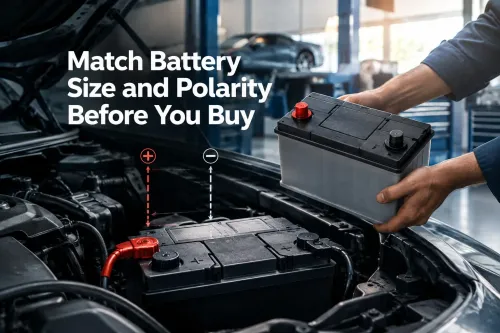
| Connections | Correct polarity, tight terminals and insulated covers | Prevents sparks, reverse connection and burns |
| Location | Upright battery, ventilation and clearance from flames or sparks | Charging can release hydrogen |
New Lucky Battery And Inverter can record the charging readings and commissioning test, giving you a baseline for future service.
Related product
 | Inverter Batteries Premium Range - The Ultimate Inverter Battery Tough Condition - Tough Battery with Thicker Plates Long Life - 1200 Cycles @ 80% DOD More Electrolyte... View product → |
When a tubular battery is the wrong fit for your home
The question behind “is exide home invatubular for right inverter battery shop” is practical: do you have the space and routine that a flooded battery demands? Choose another system if the battery must sit in an unventilated cupboard, nobody can inspect water levels, or you expect zero maintenance.
| Option | What ownership involves | When it fits |
|---|---|---|
| Flooded tubular lead-acid | Upright, ventilated placement; water checks; protection from sparks and flames | You can maintain it and have safe clearance |
| Sealed VRLA lead-acid | No routine water topping; still requires correct charging and ventilation | You want less maintenance but not lithium cost |
| Lithium | Battery-management protection, compatible charging, higher purchase cost and a total-cost check | You need frequent cycling, compact storage or minimal routine work |
A sealed or lithium system is not automatically better. Confirm inverter compatibility, charging voltage, battery protection and the cost of replacement before choosing one. A sealed battery in a hot, poorly ventilated cupboard is still a poor installation.
After buying a flooded tubular battery, keep these tasks on your ownership list:
- Inspect the electrolyte level according to the battery manual and top up only with distilled or de-ionised water.
- Never add acid during routine topping-up or use tap water; both can shorten battery life.
- Keep terminals tight, clean and protected, with cables, fuse or breaker correctly sized.
- Maintain ventilation and keep cigarettes, flames and spark-producing tools away while charging.
- Record backup performance and arrange testing if recharge becomes slow or runtime falls.
Frequently asked questions
What does Exide Home InvaTubular do in a home power system?
It is a vented tubular lead-acid battery that stores DC electricity and supplies it to an inverter during power cuts.
How do you match Exide Home InvaTubular voltage and capacity to an inverter?
Match the battery bank voltage to the inverter’s stated DC input, then select ampere-hour capacity from the loads, required backup time and safe discharge limits.
What does a tubular battery cycle-life claim mean?
Cycle life describes how many charge-and-discharge cycles the battery delivers under stated test conditions. Compare depth of discharge, load and test standard before comparing Exide ranges.
What should you verify at an inverter battery shop before installation?
Check the model, rated voltage, ampere-hour capacity, manufacturing details, warranty terms, terminal polarity, ventilation needs and installation procedure.
When is a tubular battery the wrong fit for a home?
Choose another solution when you need a sealed, maintenance-free battery, have poor ventilation, lack space for the battery, or require a system designed for a different duty cycle.
Keywords